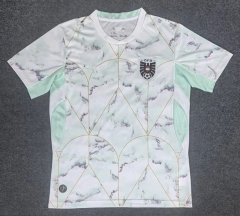
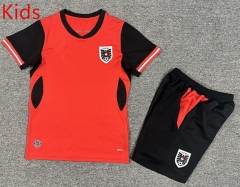
Austria
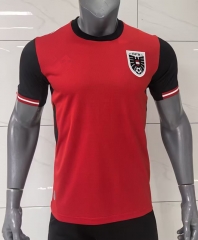
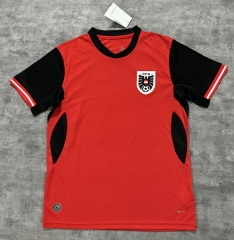
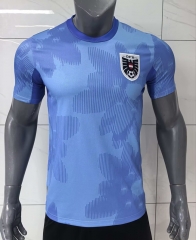
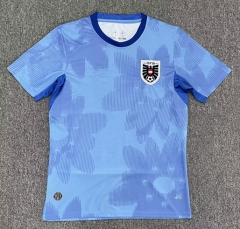
Show your support in style! The Austria jersey blends iconic red and white heritage with modern performance design. WhFrom the classic red and white home kits to the sleek and dynamic away designs, every Austria jersey reflects a blend of tradition, pride, and contemporary style. Fans and collectors alike celebrate these kits, which symbolize both the team’s rich heritage and its ambitions for future tournaments. Whether worn on the pitch or by supporters in the stands, the Austria kit is a true emblem of national pride and football excellence.ether on the pitch or in the stands, wear the spirit of Austrian football proudly.
底部介绍文案:
Austria’s national football team, often referred to simply as Austria or Das Team, is a side steeped in rich heritage, underdog spirit, and a growing reputation on Europe’s biggest stages. While not always at the forefront of global football, Austria has produced legendary eras, iconic players, and a style of play that combines technical finesse with tactical intensity. In recent years, under the guidance of German manager Ralf Rangnick, the team has enjoyed a resurgence — making deep impressions in European Championship tournaments and signaling a new era for Austrian football.
This article delves into the historical roots, defining moments, playing philosophy, key players, and future prospects of Austria’s national team, providing a comprehensive guide for fans and football observers.
Historical Roots: From the “Wunderteam” to Mid‑Century Glory
The Wunderteam Era
In the early 1930s, Austria was home to one of the most celebrated national teams in Europe, the so-called Wunderteam. Under coach Hugo Meisl and featuring the talents of Matthias Sindelar, this squad played a fluid, elegant style of football and went on a remarkable run — at one point 16 matches unbeaten. Their approach emphasized intelligent ball movement, technical skill, and positional creativity, setting a benchmark in pre‑war European football.
Post‑War Success
After World War II, Austria rebuilt its national side and re-emerged as a competitive force. The pinnacle came at the 1954 FIFA World Cup, where Austria secured third place, defeating Uruguay in the third‑place match. This remains one of their best performances on the world stage.
The Miracle of Córdoba – 1978
One of the most legendary moments in Austrian football came in the 1978 World Cup in Argentina, when Austria beat defending world champions West Germany 3–2 in Córdoba. Known as Das Wunder von Córdoba (“The Miracle of Córdoba”), this result remains a powerful symbol of Austrian national pride and their ability to punch above their weight.
Declines and Struggles
Despite those flashes of brilliance, Austria’s participation in major tournaments became inconsistent. After the 1982 World Cup, their next World Cup appearance was in 1998, where they were eliminated in the group stage. Their journey has been a roller-coaster, oscillating between resurgence and underperformance.
European Championship Journey: Finding Stability
Early Euros and First Qualification
Austria’s first appearance in the UEFA European Championship came relatively late. They co-hosted Euro 2008 with Switzerland, but were knocked out in the group stage. Co-hosting marked an important milestone for the national football association.
Building Momentum: Euro 2016 & 2020
Austria qualified for Euro 2016 in France with an impressive qualifying campaign, which included nine wins and one draw. Although they were eliminated in the group stage, the qualification itself signaled growth. In Euro 2020, they advanced to the Round of 16 — their first knockout-stage appearance in a major European Championship.
Euro 2024 Breakthrough
At Euro 2024, Austria achieved a major accomplishment: they won Group D, topping a group that included the Netherlands and Poland. Under Ralf Rangnick, Austria played with high energy, press intensity, and tactical discipline. A late Marcel Sabitzer goal clinched a dramatic 3–2 victory over the Netherlands — allowing Austria to finish first in the group. They also comfortably beat Poland 3–1, with Christoph Baumgartner and Arnautović starring. These performances reflect both maturity and ambition in modern Austrian football.
Despite losing their opening match to France via an unfortunate own goal from Maximilian Wöber, Rangnick defended his defender, emphasizing that the goal was a freak incident, not a failure of character.
Identity & Playing Style
actical Philosophy under Rangnick
Since his appointment in 2022, Ralf Rangnick has transformed Austria’s style. Known as one of the founders of gegenpressing, his philosophy emphasizes relentless pressing, fast transitions, and high energy on the pitch. His influence has been palpable: Austria plays with greater intensity, makes sharp recovery runs, and is not afraid to attack in waves, even against elite teams.
Rangnick also showed trust in squad depth. In key matches, he rotated players intelligently — sometimes resting starters when qualification was nearly secured. His squad management and tactical flexibility have helped Austria become a dangerous and unpredictable opponent.
Balancing Tradition and Modernity
Although Austria is adopting modern pressing football, they have not totally abandoned their technical roots. The legacy of the Wunderteam’s ball control and positional intelligence is still evident, particularly in midfield build-up and intelligent off-ball movement. This fusion of classical Austrian football with 21st-century intensity gives them a unique identity.
Key Players & Talents
Veterans & Stars
Marko Arnautović: A veteran forward and goal-scorer, Arnautović remains a central figure for Austria. He captained the side during Euro 2024 and scored a key penalty against Poland.
David Alaba: Though plagued by injuries, Alaba’s experience and versatility (defence and midfield) remain invaluable.
Emerging Midfield Threats
Christoph Baumgartner: A dynamic midfielder with strong tactical awareness and goal-scoring ability. He scored in the crucial Euro 2024 match vs Poland.
Nicolas Seiwald: Praised by Rangnick for his composure and ability to control the tempo.
Defensive Backbone
Philipp Lienhart: A defender who has grown into a reliable presence in Austria’s backline.
Maximilian Wöber: Solid center-back, though remembered for an own-goal vs France at Euro 2024 — a moment Rangnick publicly defended, calling it an accident.
Challenges & Weaknesses
Knockout Curse
One consistent criticism of Austria’s national team is their historic inability to win knockout matches in major tournaments. Despite reaching the Round of 16 twice in recent Euros (2020, 2024), they still lack a deep tournament run. Austria often shows promise, but struggles to break through when the stakes are highest.
Overdependence on Key Personalities
While Austria has emerging talent, some of their success still hinges on aging or established players like Arnautović or Baumgartner. If injuries or form drop for these core figures, the team may struggle to maintain its attacking threat.
Depth and Experience
Although Rangnick has rotated smartly, Austria’s squad depth is still tested when competing at the highest level. Their Bundesliga-heavy selection helps, but they may lack world-class cover in certain positions compared to more established European powers.
Development & Youth System
Austria’s football infrastructure has undergone modernization, especially in youth development. The ÖFB (Austrian Football Association) has invested in federal performance centers and the nationwide Toto Youth League to nurture young talent. These systems have started to yield results: Austrian youth teams have become more competitive, and young players are increasingly making their way into senior squads.
This long-term planning has helped Austria build a more sustainable national team model — not just relying on aging stars, but integrating youth with tactical education, technical training, and physical readiness.
Cultural & National Significance
Football as a Reflection of Austrian Identity
Football in Austria carries cultural weight. The legacy of the Wunderteam, the “Miracle of Córdoba,” and the third‑place finish in 1954 are woven into the country’s football narrative. For many Austrians, the national team symbolizes a bridge between a proud past and an ambitious present.
ÖFB and Governance
The Austrian Football Association (ÖFB) plays a crucial role not just in managing the national team, but in promoting football development at all levels. Their commitment to youth academies, performance centers, and domestic leagues is central to creating a competitive, sustainable national program.
Recent Trends & Future Outlook
1 Euro 2024 Momentum
Austria’s performance in Euro 2024 was a clear signal: they are no longer just hopeful qualifiers — they are serious contenders. Winning a tough group demonstrated their growth under Rangnick and the resilience of their squad.
Tactical Evolution
With Rangnick likely to remain influential, Austria may continue to refine its pressing, counter-pressing, and transition-based football. The blend of youth and experience could make them even more dynamic, especially if emerging talents like Seiwald and Baumgartner continue to develop.
Major Tournament Ambitions
While Austria has yet to break through past the Round of 16 in the Euros, their trajectory suggests that a deeper run — possibly in Euro 2028 or World Cup 2030/2034 — is becoming more realistic. But to achieve that, they will need to:
Build more knockout-stage experience, perhaps in Nations League games or high-quality friendlies.
Diversify their scoring sources, reducing reliance on a handful of veterans.
Continue investing in youth, ensuring the next generation is ready for pressure.
Bolster tactical flexibility, adapting not only to pressing football but also to more nuanced, possession-based styles when needed.
Why Austria Is a Team to Watch
Underdog with pedigree: Austria carries historical prestige but is not burdened by the expectations of perennial favorites — making them exciting and unpredictable.
High-intensity modern play: Under Rangnick, they play with pace, pressing, and a clear structure — qualities that make them dangerous against both weaker and elite nations.
Emerging talent: Players like Seiwald and Baumgartner represent a bright future, while veterans like Arnautović give leadership and firepower.
Growing football infrastructure: The ÖFB’s investment in youth, performance centers, and coaching gives long-term optimism for sustainable success.
Challenges to Overcome
Despite the positive signs, Austria still faces some hurdles:
Breaking their knockout curse in major tournaments.Balancing aging stars with rising youth.
Deepening squad quality to compete for outright titles.Maintaining consistency in qualification and major tournament performances.If they succeed, Austria could transition from a dark-horse contender to a genuine European heavyweight — a transformation that would be deeply satisfying for fans and a testament to strategic planning.
Conclusion
The Austria national football team is at a fascinating crossroads: anchored in a storied past, energized by a revitalized present, and brimming with potential for the future. Through historical achievements like the Wunderteam era, the Miracle of Córdoba, and their 1954 World Cup success, Austria has already carved its place in football history. But now, under Ralf Rangnick, the team is charting a new course — one defined by pressing, ambition, and a hunger to break long-standing barriers.
As they look ahead to future European Championships and World Cups, Austria is no longer just participating — they are contending. For fans and football observers, this Austrian side represents one of Europe’s most compelling stories: a national team on the rise, intent on turning potential into legacy.
 USD
USD EUR
EUR GBP
GBP CAD
CAD AUD
AUD JPY
JPY