F.C. Copenhagen
Among all the Scandinavian football clubs, few have achieved the level of success and recognition that FC Copenhagen (F.C. København or FCK) enjoys today. Founded in 1992, this club from Denmark’s capital has become the dominant force in Danish football and one of the most consistent representatives of Scandinavia on the European stage. Known for its professional management, passionate supporters, and iconic home ground — Parken Stadium — FC Copenhagen is more than just a football club. It’s a modern success story built on tradition, unity, and ambition.
Origins and Formation: A Modern Club Built on Tradition
Unlike many European football clubs with 19th-century roots, FC Copenhagen’s history began relatively recently — in 1992 — when two of Denmark’s oldest clubs decided to merge: Kjøbenhavns Boldklub (KB) and Boldklubben 1903 (B1903).
KB, founded in 1876, was one of the pioneers of football in Denmark and even one of the oldest football clubs in continental Europe. B1903, on the other hand, was established in 1903 and achieved several domestic triumphs during the 20th century.
The merger was driven by a shared vision: to combine resources, talent, and fan bases to create a club capable of competing not only in the Danish Superliga but also in European competitions. Thus, Football Club København was born — carrying the legacy of both parent clubs while representing the future of professional football in Denmark.
The Rise to Dominance: Early Success in the Danish Superliga
The club wasted little time establishing itself as a powerhouse. In its first Superliga season (1992–93), FC Copenhagen won the league title, signaling the arrival of a new football force in Denmark.
While the mid-1990s saw a few inconsistent years, the arrival of the new millennium marked the beginning of an era of dominance. From the early 2000s onward, FC Copenhagen became synonymous with success in the Danish Superliga, winning multiple league titles and domestic cups.
The club’s consistent performance has not only set the standard in Denmark but also helped raise the overall competitiveness of the league.
Home of the Lions: Parken Stadium
FC Copenhagen’s home ground, Parken Stadium, is more than just a venue — it’s a national symbol of Danish football. Located in Østerbro, a district of Copenhagen, Parken was originally built in 1992 (on the site of the old national stadium, Idrætsparken).
With a seating capacity of around 38,000, it is the largest football stadium in Denmark and also serves as the official home stadium for the Denmark national football team.
Parken’s design combines modern architecture with a traditional football atmosphere. The fans, especially those in Sektion 12, create one of the most vibrant and intimidating environments in Northern Europe. On matchdays, the entire stadium comes alive with chants, songs, and banners — a testament to the passionate fan culture surrounding FC Copenhagen.
The Club Identity: The Lion and the White
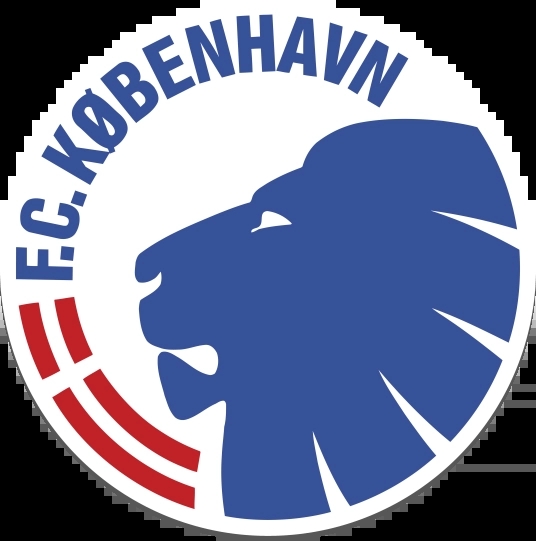
The FC Copenhagen logo features a blue lion head on a white background, symbolizing strength, courage, and pride — values deeply embedded in both Danish heritage and the club’s mentality.
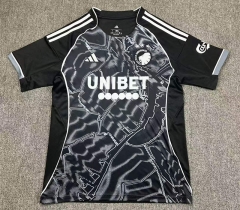
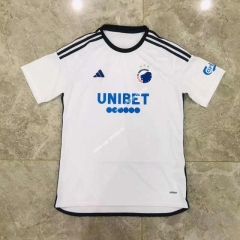
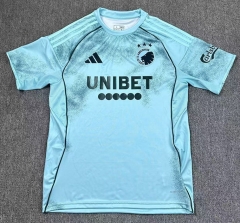
The team’s home kit traditionally features white shirts and shorts with blue accents, representing purity and unity. The away kits often experiment with darker tones — navy, black, or even deep red — reflecting modern Scandinavian design aesthetics.
These visual elements, combined with the club’s disciplined and organized playing style, have created a distinct identity recognized across Europe.
Domestic Achievements: Setting the Standard in Danish Football
Since the early 2000s, FC Copenhagen has built a dynasty in domestic football. The club has won the Danish Superliga title more than 15 times and has lifted the Danish Cup on several occasions.
Their dominance has been sustained through careful management, strong recruitment, and a professional infrastructure that few Scandinavian clubs can match. While other teams have risen temporarily — such as Brøndby IF, FC Midtjylland, and Aalborg BK — FCK has remained the benchmark for consistency.
The club’s ability to rebuild and refresh its squad without losing competitiveness is a testament to its long-term vision.
European Adventures: Flying the Danish Flag Across the Continent
One of the most remarkable aspects of FC Copenhagen’s success is its consistent participation in European competitions.
In 2010–11, the club made history by becoming the first Danish team to reach the UEFA Champions League Round of 16, where they faced Chelsea FC. That season remains a milestone not only for the club but also for Danish football as a whole.
Over the years, FCK has faced some of Europe’s most powerful clubs — including Manchester United, Real Madrid, Bayern Munich, and Manchester City. While they have rarely advanced deep into knockout stages, their disciplined performances and organized defense have earned respect across the continent.
The club’s European appearances have also boosted Denmark’s UEFA coefficient ranking, benefiting the entire league by granting more qualification spots for other Danish teams.
Rivalries: The New Firm
No story about FC Copenhagen would be complete without mentioning its fiercest rival — Brøndby IF.
Their clashes are known as “The New Firm”, a name inspired by the famous English rivalry “The Old Firm” between Celtic and Rangers. The New Firm derby represents the ultimate battle between the two most successful and popular clubs in Denmark — a cultural, regional, and sporting rivalry that defines Danish football.
Matches between FCK and Brøndby are emotional and intense, both on and off the pitch. They showcase the passion of Danish supporters and the growing professionalism of the Danish Superliga.
Notable Players and Coaches
Over the years, FC Copenhagen has been home to a mix of Danish legends and talented internationals.
Some of the most notable names include:
Jesper Grønkjær–Former Danish international and a key player during the club’s golden years.
Zeca–The Greek midfielder who captained the team with remarkable leadership.
Andreas Cornelius–A homegrown striker who has represented Denmark in major tournaments.
William Kvist–A symbol of consistency and professionalism, both on and off the field.
On the coaching side, figures like Ståle Solbakken have been instrumental in shaping the club’s modern identity. His tactical discipline, attention to detail, and understanding of Scandinavian football culture have made him one of FCK’s most successful managers.
Fan Culture, Community, and Jerseys
FC Copenhagen’s fanbase is one of the most passionate in Northern Europe.
The Sektion 12 supporters’ group is the beating heart of Parken Stadium, creating a mesmerizing visual and vocal spectacle every matchday. Fans are known for their unity, creativity, and deep loyalty — whether the club plays a local derby or a Champions League night against European giants.
Beyond cheering in the stadium, fans also embrace the club’s distinctive jerseys, which have become symbols of identity and pride. The home kit, traditionally white with blue accents, represents purity and unity, while the away kits often feature darker or bolder designs, reflecting contemporary Scandinavian aesthetics. Wearing these colors, whether in casual settings or at matches, allows supporters to feel connected to the team and its rich history, even beyond the stadium.
Beyond football, FC Copenhagen plays an active role in the community. The club regularly supports social initiatives in Copenhagen, promotes youth sports participation, and emphasizes inclusion and equality — values that resonate strongly with Danish society.
Modern Era and European Ambition
In recent years, FC Copenhagen has continued to balance domestic dominance with European ambition. Competing against financially stronger clubs from larger leagues is always a challenge, but FCK’s consistent qualification for UEFA tournaments proves their resilience.
The club’s long-term vision focuses on three pillars:
Sustained domestic success through smart transfers and academy development.
Competitive European performance with disciplined tactics and efficient play.
Business growth and fan engagement, ensuring the club remains financially secure and socially relevant.
With Danish football evolving rapidly, FC Copenhagen remains its flagship — representing not only the capital city but also the strength of Scandinavian football culture.
Conclusion: A Modern Success Story in Scandinavian Football
From its humble beginnings as a merger in 1992 to becoming a dominant force in Denmark and a respected name across Europe, FC Copenhagen has achieved what many clubs aspire to — success built on vision, structure, and community.
They are more than just Denmark’s most successful club; they are the face of modern Danish football — combining professionalism, heritage, and ambition.
Whether under the lights of Parken Stadium or on the grand stages of European football, FC Copenhagen continues to roar proudly — the Lions of the North, carrying the hopes of their fans and the pride of a nation.
 USD
USD EUR
EUR GBP
GBP CAD
CAD AUD
AUD JPY
JPY