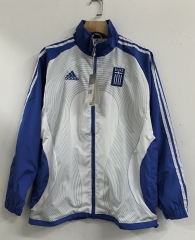
Greece
The Greece national football team, celebrated for its disciplined defense and tactical intelligence, has captured the attention of football fans worldwide. From their historic Euro 2004 triumph to ongoing participation in FIFA World Cups and European Championships, Greece continues to showcase resilience, strategic play, and national pride. This comprehensive guide explores the team’s history, playing style, key players, jerseys, fan culture, records, and future prospects, offering football enthusiasts an in-depth look at Greek football.
Early Years and Formation of Greek Football
Football in Greece dates back to the early 20th century, when informal matches were played between local clubs and universities. The Hellenic Football Federation (HFF) was established in 1926, providing formal organization for domestic competitions and international representation.
In the early years, Greece faced significant challenges: limited resources, few professional players, and minimal exposure to international competitions. Despite these obstacles, domestic clubs such as Olympiacos, Panathinaikos, and AEK Athens became critical pipelines for the national team, helping identify and train talent that would later compete on the world stage.
Greece participated in early Balkan Cup tournaments, which fostered competitive spirit and introduced players to international standards. These formative years helped Greece develop the disciplined, defensive style that would later define the national team.
Historical Achievements
Greece’s football history is highlighted by several key accomplishments:
UEFA Euro 2004 Champions: Greece shocked the football world by defeating host nation Portugal in the final, marking a historic underdog story.
FIFA World Cup Appearances: Greece qualified for the World Cup in 1994, 2010, and 2014, gaining valuable international experience.
UEFA European Championships: Greece competed in multiple editions, including 1980, 2008, 2012, and 2016, consistently demonstrating tactical discipline and team cohesion.
The Euro 2004 victory remains Greece’s crowning achievement, symbolizing the power of teamwork, strategy, and resilience over star-studded opponents.
Tactical Evolution Through the Decades
Greece is synonymous with strong defensive organization, but its playing style has evolved:
1960s–1980s: Focused on 4-4-2 formations, emphasizing man-to-man marking and defensive solidity.
1990s: Coaches like Alketas Panagoulias introduced controlled ball possession alongside defense.
2000s: Under Otto Rehhagel, Greece mastered counter-attacking football, leading to the Euro 2004 triumph.
2010s–2020s: The team incorporated modern pressing and positional play, balancing defense with attacking opportunities.
This tactical evolution has allowed Greece to remain competitive against stronger European teams, maintaining its reputation as a tough, organized opponent.
Legendary Matches Before Euro 2004
Before their historic win in 2004, Greece had several notable matches that shaped the team’s identity:
Greece vs. Denmark, 1980 European Championship: First appearance in a major tournament.
1994 World Cup Qualifiers: Greece displayed strong defense despite not qualifying.
Euro 2000 Qualifiers: Narrowly missed qualification but gained crucial international experience.
These early matches established a culture of discipline, resilience, and strategic play, laying the foundation for future success.
Key Players in Greek Football History
Legendary Players
Giorgos Karagounis: Legendary midfielder and captain, known for vision, leadership, and set-piece ability.
Theofanis Gekas: Prolific striker and consistent goal scorer.
Angelos Charisteas: Scored the winning goal in the Euro 2004 final, becoming a national hero.
Antonios Nikopolidis: Goalkeeper and defensive backbone during Euro 2004.
Sokratis Papastathopoulos: Central defender with extensive experience in top European leagues.
Rising Stars
Petros Mantalos: Attacking midfielder emerging in domestic leagues.
Giannis Gianniotas: Versatile forward known for creativity and speed.
Highlighting both legendary and current players ensures readers understand Greece’s talent pipeline and enhances SEO with multiple player name mentions.
Greece Football Jerseys
Historical Jersey Designs
Greece’s football kits have evolved while maintaining national identity:
1990s: Simple designs with minimal accents, classic aesthetic.
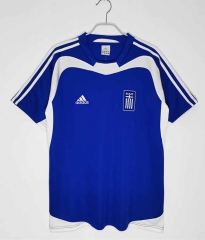
2000s: Advanced materials for Euro 2004, emphasizing lightweight comfort and moisture control.
2010s: Modern designs with shades of blue, subtle Greek cultural patterns, and updated branding.
Home and Away Kits
Home Kit: Predominantly white with blue accents.
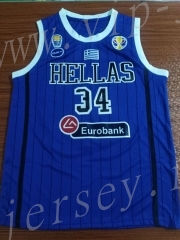
Away Kit: Primarily blue, often used to differentiate from opponents.
Special Editions: Limited designs celebrating tournaments or anniversaries, highly popular among fans.
Fans worldwide proudly wear these jerseys, commemorating Euro 2004 and supporting the team in international matches.
Fan Culture and Stadium Atmosphere
Greek football fans are passionate and vocal, contributing to the team’s identity:
Olympic Stadium (Athens): The largest venue, known for energetic atmospheres during home matches.Gate 13 Supporters: Famous Panathinaikos fan group, inspiring chants that energize players.Chants and Songs: Unique to Greek football, often referencing historical victories and national pride.The synergy between fan support and team performance creates an inspiring football environment, both in Greece and abroad.
Tournament Performance and Records
UEFA European Championships
Euro 1980: Group-stage exit.
Euro 2004: Champions, defeating Portugal in the final.
Euro 2008: Group-stage exit.
Euro 2012: Round of 16.
FIFA World Cups
1994: Qualification attempt only.
2010: Group-stage exit, notable defensive displays.
2014: Group-stage exit, with strong tactical performances.
Notable Records
Longest Unbeaten Streak: 12 matches, including Euro 2004 qualifiers and tournament.
Top Scorer: Nikos Anastopoulos, 29 goals in official international matches.
Historic Wins: Euro 2004 final against Portugal remains Greece’s most celebrated match.
Challenges and Modern Development
Despite past success, Greece faces ongoing challenges:
Youth Development: Ensuring young talent replaces retiring legends.
Domestic League Competitiveness: Strengthening local clubs to produce world-class players.
Strategic Adaptation: Balancing traditional defensive tactics with modern offensive play.
The HFF has invested in youth academies, modern training facilities, and coaching programs to overcome these challenges and secure Greece’s competitiveness on the world stage.
Future of Greek Football
The future of Greek football looks promising:
Emerging talent from domestic leagues and European clubs.
Continued investment in tactical training and physical development.
Potential resurgence in European and world competitions with a balanced style of play.
Analysts predict that combining tactical discipline with emerging attacking talent could lead to renewed success in upcoming UEFA European Championships and FIFA World Cups.
Conclusion
The Greece national football team embodies resilience, strategy, and national pride. From historic victories to the cultivation of new talent, and from iconic jerseys to passionate fans, Greek football continues to inspire supporters worldwide. Following the journey of the Greece national team is more than just watching matches; it’s witnessing a story of teamwork, discipline, and enduring passion for the beautiful game.
Brentford FC has become one of the most compelling stories in modern English football. Known for its data-driven recruitment, smart budgeting, and distinct tactical identity, the West London club continues to outperform expectations in the Premier League. As fans worldwide search for information on the club’s performance, transfers, players, and kits, Brentford has quickly become a strong SEO keyword within football content.
 USD
USD EUR
EUR GBP
GBP CAD
CAD AUD
AUD JPY
JPY