Queens Park Rangers F.C
Queens Park Rangers Football Club, founded in 1882 in West London, stands as one of the most historically significant and community-rooted football institutions in England, representing a club whose identity has been shaped not only by competitive ambition and memorable achievements but also by the enduring loyalty of a supporter base that has preserved its traditions across generations. Over the course of more than a century, QPR has navigated periods of remarkable sporting success, structural transformation and strategic reinvention, gradually forming a distinctive presence within English football that continues to evolve in both sporting and cultural dimensions.
Origins and Early Formation
The club’s beginnings can be traced to the merger of two local church teams—St Jude’s and Christchurch Rangers—whose consolidation laid the foundation for a unified representative side in the Queen’s Park area. During the late 19th and early 20th centuries, QPR transitioned from a modest neighborhood team into an organized football club participating in increasingly competitive regional and national frameworks, steadily attracting wider attention through growth in membership, institutional professionalism and a commitment to structured sporting development. Although financial limitations and infrastructural constraints characterized much of this early period, the club managed to establish a resilient identity that would later enable it to thrive at higher levels of competition.
Strategic Rise in the 1960s and the Breakthrough of 1967
QPR’s genuine emergence as a nationally recognized club occurred during the 1960s, a decade marked by progressive management, ambitious recruitment and a tactical approach that embraced fluidity, attacking creativity and a willingness to challenge established football hierarchies. This evolving competitiveness culminated in 1967, when Queens Park Rangers achieved a milestone that reshaped perceptions of the club’s potential: the historic Football League Cup victory, during which QPR became the first third-division team to lift the trophy, overcoming top-division opposition through skill, composure and a style of play that captured the attention of the wider football public. The triumph served as an early signal that the club possessed both the technical capacity and organizational vision to push beyond traditional limitations.
The Golden Period of the 1970s and the Near Championship Triumph of 1975–76
While the 1960s provided momentum, the 1970s represent the period most widely regarded as QPR’s golden era. Under the sophisticated leadership of Dave Sexton, the club developed a distinctive playing identity centered on tactical discipline, intelligent ball circulation and a cohesive team structure that allowed technical individuals to flourish. The squad—featuring influential figures such as Stan Bowles, Gerry Francis, Don Givens and Phil Parkes—consistently demonstrated a balance of creativity and control that placed QPR among the most admired sides of the decade.
This era reached its pinnacle during the 1975–76 First Division season, when QPR mounted an extraordinary title challenge that ultimately concluded with a second-place finish, narrowly behind Liverpool in one of the most dramatic league finales in English football history. Although the title eluded them by a single point, the campaign solidified QPR’s status as an elite-level competitor and established a cultural memory that remains central to the club’s long-term narrative.
Loftus Road – A Stadium of Identity and Continuity
Since 1917, the club has been anchored by Loftus Road Stadium, a compact and character-rich ground situated in Shepherd’s Bush whose close-proximity stands and enclosed design generate an atmosphere often described as one of the most intimate and acoustically intense in English football. While it lacks the scale and architectural modernity of larger metropolitan venues, Loftus Road serves as a symbol of continuity, connecting generations of supporters through shared rituals, matchday traditions and an environment that reinforces the club’s community-oriented spirit. The ground embodies QPR’s identity: close-knit, historically grounded and deeply intertwined with its West London surroundings.
Club Icons and Influential Figures Across Eras
Queens Park Rangers has, over the decades, been shaped by a series of exceptional players whose contributions transcended individual seasons and left lasting imprints on the club’s identity.
Historic Icons
Rodney Marsh, whose flair and improvisational skill defined an era of expressive attacking football.
Stan Bowles, often revered as the club’s greatest player, known for his unique blend of creativity, confidence and technique.
Les Ferdinand, whose powerful presence and prolific scoring output established him as one of the Premier League’s most respected forwards.
Gerry Francis, whose leadership and consistency made him a central figure both on and off the pitch.
Modern Contributors
In later decades, players such as Adel Taarabt, Charlie Austin, Nedum Onuoha and Joey Barton contributed to promotion campaigns and Premier League survival efforts, collectively reinforcing QPR’s reputation for nurturing expressive attackers and dynamic midfielders within various tactical frameworks.
Premier League Participation and Structural Evolution
QPR has experienced multiple stints in the Premier League—most notably in 1992–1996, 2011–2013 and 2014–2015—each bringing distinct challenges and developmental shifts. The early Premier League years, supported by standout performances from Les Ferdinand and a cohesive squad structure, established QPR as a competitive force capable of troubling elite teams. The more recent promotions, however, were characterized by substantial financial investment, ambitious recruitment and a rapidly evolving football landscape that demanded continuous adaptation. While these efforts produced memorable moments and sustained visibility at the top level, they also revealed the need for a long-term stabilizing strategy—one the club has since embraced.
A Modern Philosophy Rooted in Sustainability and Development
In response to financial volatility and performance fluctuations, QPR has, in recent years, adopted a more data-informed, development-centered and fiscally responsible operating model. The club prioritizes youth progression, with increased investment in academy facilities, performance analytics and individualized player development pathways designed to ensure a steady flow of emerging talent into the first team.
Simultaneously, QPR’s recruitment philosophy has shifted toward a measured, value-driven approach that emphasizes adaptability, long-term growth and alignment with a coherent playing identity rather than short-term spending surges. This strategy is supported by continuous improvements in training infrastructure and strengthened connections with local communities through educational, health and engagement initiatives led by the QPR Community Trust.
Supporter Culture and Community Presence
The emotional core of Queens Park Rangers lies in its supporter base, a community whose identity is deeply interwoven with the cultural fabric of West London. QPR supporters uphold a tradition of loyalty, humor and resilience, maintaining a sense of belonging that extends far beyond match results. The fan culture is characterized by distinctive chants, intergenerational support, and a commitment to sustaining the values of authenticity and closeness that have long defined the club. At Loftus Road, the proximity between players and supporters creates an environment in which collective emotion becomes central to the matchday experience, reinforcing the club’s reputation for sincerity and grassroots spirit.
Honors and Historical Achievements
Although QPR does not hold an extensive trophy collection, its achievements carry significant historical weight and continue to shape the club’s identity.
Football League Cup Champions (1967)
First Division Runners-Up (1975–76)
Second Division / Championship Winners (1982–83, 2010–11)
EFL Play-Off Final Winners (2014)
These milestones reflect periods of strategic clarity, strong coaching and cohesive squad performance, contributing to the club’s long-term narrative of ambition and resilience.
Where to Buy Queens Park Rangers Jerseys
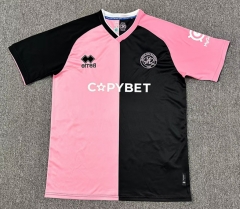
For supporters looking to purchase an authentic Queens Park Rangers jersey, the most reliable options include official club channels and certified sports retailers that offer the latest home, away and alternate kits in a range of sizes and styles. Fans can choose between replica versions designed for everyday comfort and match-grade editions featuring advanced performance fabrics used by the players themselves.
Conclusion
Queens Park Rangers F.C. represents far more than a football club; it is an enduring cultural institution that encapsulates more than a century of history, tradition and shared identity within West London. From the pioneering eras of the 1960s and the iconic near-title triumph of the 1970s to contemporary efforts emphasizing youth development, sustainability and community involvement, the club continues to evolve while preserving the character that defines it. As QPR prepares for future challenges and opportunities, it remains shaped by a legacy of perseverance, expressive football and the unwavering support of the fans who have carried its spirit forward for generations.
 USD
USD EUR
EUR GBP
GBP CAD
CAD AUD
AUD JPY
JPY